- ▸ Default RTP is 96.13%, the only figure on the official page.
- ▸ Reduced builds exist at 94.03%, 92.11% and 87.13% - check the in-game paytable to see which one you loaded.
- ▸ The 200,000x ceiling is a bet multiplier, not a fixed money cap - never read it as a dollar figure.
- ▸ Volatility is "Insane", so bankroll for long dry runs, not steady wins.
- ▸ Base-game hit rate sits around 26.9%, but the bonus triggers only about once every 299 spins - two very different numbers.
Reviewed game
 San Quentin 2 (Nolimit City)
Play the game
18+ | T&C apply | Play responsibly
San Quentin 2 runs a 96.13% default RTP, but Nolimit City ships reduced-RTP builds - reported around 94.03%, 92.11% and 87.13% - so the version at your casino can be lower. The ceiling is a huge 200,000x your bet, hit at odds near 1 in 1.5 million on an Insane volatility model. Here is what the maths mean for a real session.
The numbers that decide whether this slot is worth your stake
Default RTP here is 96.13%, the ceiling is 200,000x your bet, and the volatility label is Nolimit's own top tier, "Insane". Those three figures set your expectations before you spin a single reel. The catch, and the reason this page exists, is that operators can deploy reduced builds: databases report versions running at 94.03%, 92.11% and as low as 87.13%. So the RTP you actually play against depends on the casino, not just the game. You reach that 200,000x top figure through a fully compounded five-Jumping-Wild run in Green Mile Spins, at odds of roughly 1 in 1.5 million. That is a multiplier, not a cash cap.
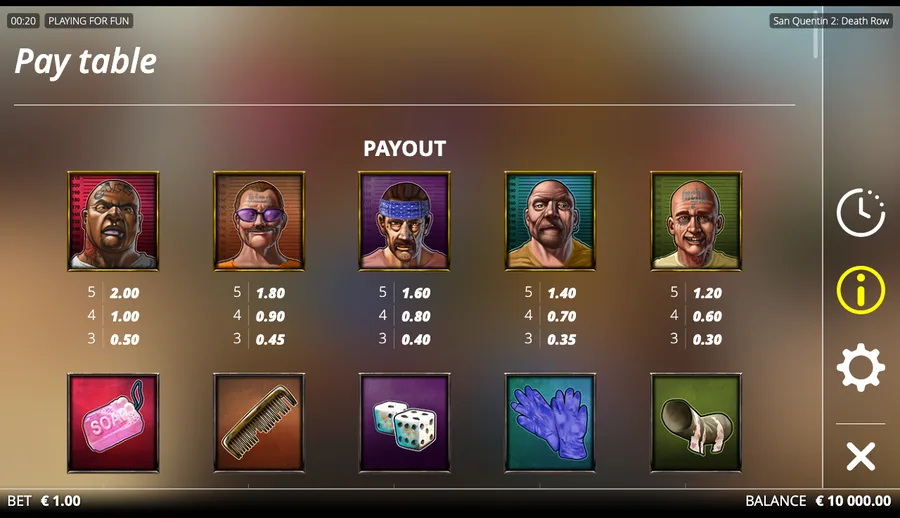
Read the paytable before you deposit. It is the one place the version is disclosed, and the gap between a 96.13% table and an 87.13% one is worth nine cents on every euro you cycle through.
Key takeaways
The four RTP builds, and what each costs you
Nolimit ships San Quentin 2 in several RTP configurations and lets each operator pick one. The table below shows the reported builds and what the theoretical house edge takes from every €100 you stake, cycled over the long run. This is the single most useful number on the page, so we put it first. The "cost per €100" is the theoretical loss over time, not a per-spin figure, and real short sessions swing wildly around it on a slot this volatile.
96.13% (default)
Theoretical cost €3.87 per €100 staked over time. This is the build you want, and the only RTP printed on Nolimit City's official page.
94.03%
Theoretical cost €5.97 per €100. A common "reduced" tier - noticeably worse, though still in the range many operators run.
92.11%
Theoretical cost €7.89 per €100. Roughly double the edge of the default build. Avoidable if you shop around.
87.13%
Theoretical cost €12.87 per €100 - more than three times the default edge. We would walk away from this one.
How to tell which build you loaded
Every certified slot has to disclose its active RTP, and San Quentin 2 does it in the paytable or info panel. Open the menu, scroll to the RTP line, and read the exact percentage. If it says 96.13%, you are on the full-fat version. If it reads 92.11% or 87.13%, the operator has dialled the return down, and you are paying for it on every spin.
Our named anti-recommendation
- We would not play a cabinet or lobby tile showing 87.13% RTP. Close it and find a casino running the 96.13% build - the game is identical, only the return changes.
- If the paytable hides the RTP entirely, treat that as a reason to walk, not a detail to shrug off.
You can confirm the default figure yourself on Nolimit City's game page, then compare it against whatever your casino displays.
What the 200,000x ceiling really means
The headline is 200,000x your bet, and it is confirmed on the official page. Read it as a multiplier. At the €0.20 minimum it means one thing, at the €100 maximum it means another, but the number attached to the game is the multiple, never a currency figure. We do not quote a fixed cash cap because there isn't one.
You get there one way: a fully compounded run of five Jumping Wilds inside Green Mile Spins, with the multipliers doubling on Razor Splits and persisting to the end of the feature. It is the extreme tail of the maths, illustrative rather than a target, and the odds sit at roughly 1 in 1.5 million. Most sessions never come within sight of it. That ceiling is still four times the original San Quentin xWays, which topped out at 150,000x, so the sequel genuinely raised the roof even if almost nobody touches it.
Volatility: what "Insane" feels like
"Insane" is Nolimit's own top volatility grade, and we won't dress a number on it - the studio doesn't publish one, and the "168" or "10/10" scores floating around are affiliate inventions. In practice it means feast or famine. Base wins are tiny and infrequent between features, and the real money lives inside Green Mile Spins, which you'll wait a long time to see.
When we loaded the demo and played a couple of hundred spins, the base game went cold for long stretches, dropped a scatter to nudge our balance now and then, and never triggered the feature in our short, unscientific sample. That's exactly what Insane variance looks like, and a couple of hundred spins is far too few to draw firm conclusions.
Three numbers people conflate
- 26.9% - roughly how often a base spin returns any win at all.
- 1 in 299 - how often the Green Mile Spins bonus triggers.
- 1 in ~1.5 million - the odds of the 200,000x max win.
Those are three separate things. A 26.9% hit rate does not mean you win a quarter of the time in any meaningful bankroll sense, and it has nothing to do with the max-win odds.
Our demo-session log
Here is what our small demo run actually did, logged honestly. This is one short, unscientific sample on the free-play build, not a rigorous statistical test, and your results will differ. We include it so you can see what a cold Insane-volatility session looks like in numbers rather than in adjectives.
| Metric | What we saw (demo, ~200 spins) |
|---|---|
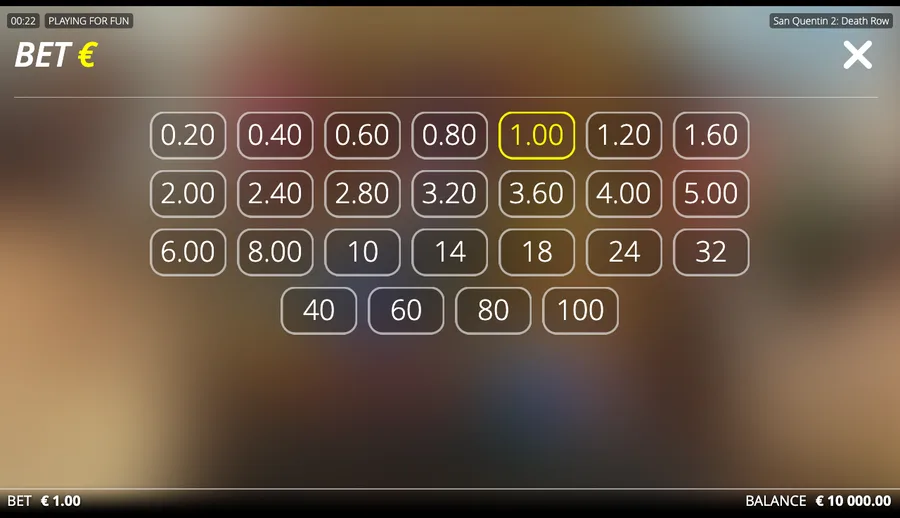
| Stake per spin | €1.00 |
| Longest dead run (no win) | roughly 20+ spins |
| Biggest single base win | a modest few times the stake |
| Green Mile Spins triggered | 0 in this sample (bonus is ~1 in 299) |
| Overall balance trend | down and grinding, as Insane variance predicts |
The takeaway isn't the exact figures, it's the shape: long flat stretches, small base pay-outs, and a feature you have to be patient (and lucky) to see. Try it yourself first on the San Quentin 2 demo before committing real money.
Check your own history, don't trust a feeling
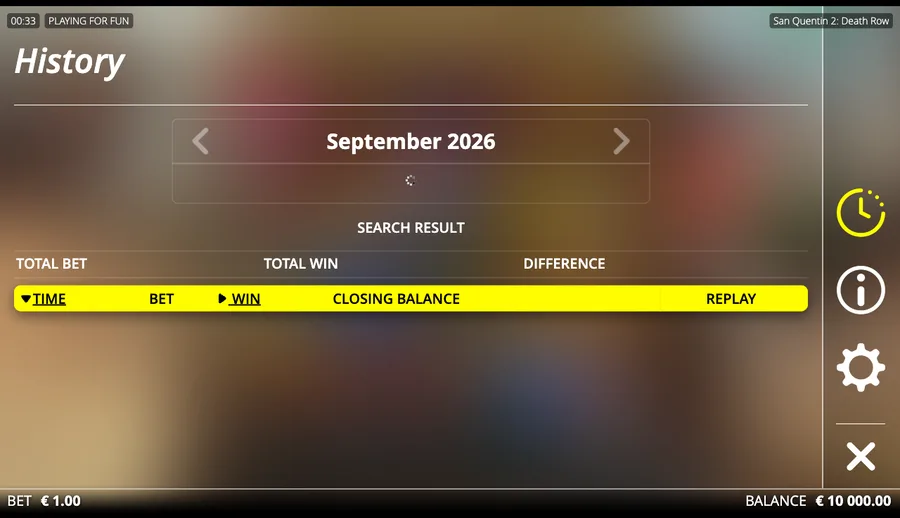
The game keeps a running ledger of every spin - bet, win, closing balance - and it's the honest record of how a session actually went. We lean on it instead of memory, because Insane volatility makes a run of near-misses feel far luckier than the balance says it was.
Before you play for real
- Read the RTP badge in the paytable and confirm it's 96.13%.
- Size your bankroll for long dry runs, not for the 200,000x ceiling.
- Play the free demo first, then check the history ledger to see the true trend.
Bottom line on RTP and max win
The maths is generous at the top and honest at the bottom. A 96.13% default and a 200,000x ceiling make this a strong high-volatility slot, but two things decide whether it's worth your money: the RTP build your casino actually runs, and whether your bankroll can survive Insane variance. Get the 96.13% version, stake small, and treat the ceiling as a story, not a plan.
Want the full picture? See how the maths pays out through the features, why the shortcut into Green Mile Spins is priced the way it is on the bonus buy, or read our full San Quentin 2 review for the overall verdict. When you're ready to play for real, play San Quentin 2 for real money - but only on a 96.13% table.